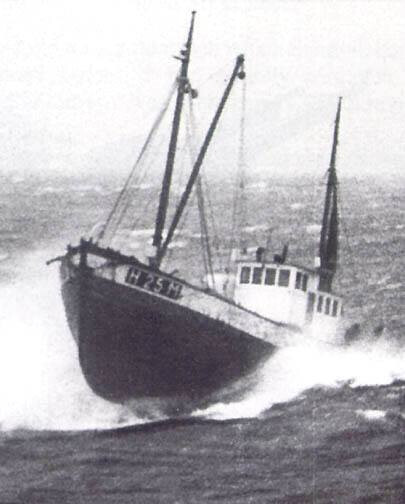
Here is one of the fishing boats used as a Shetland bus.
Now belonging to Sunnmøre Museum in Ålesund and maintained in good working condition by local volunteers:
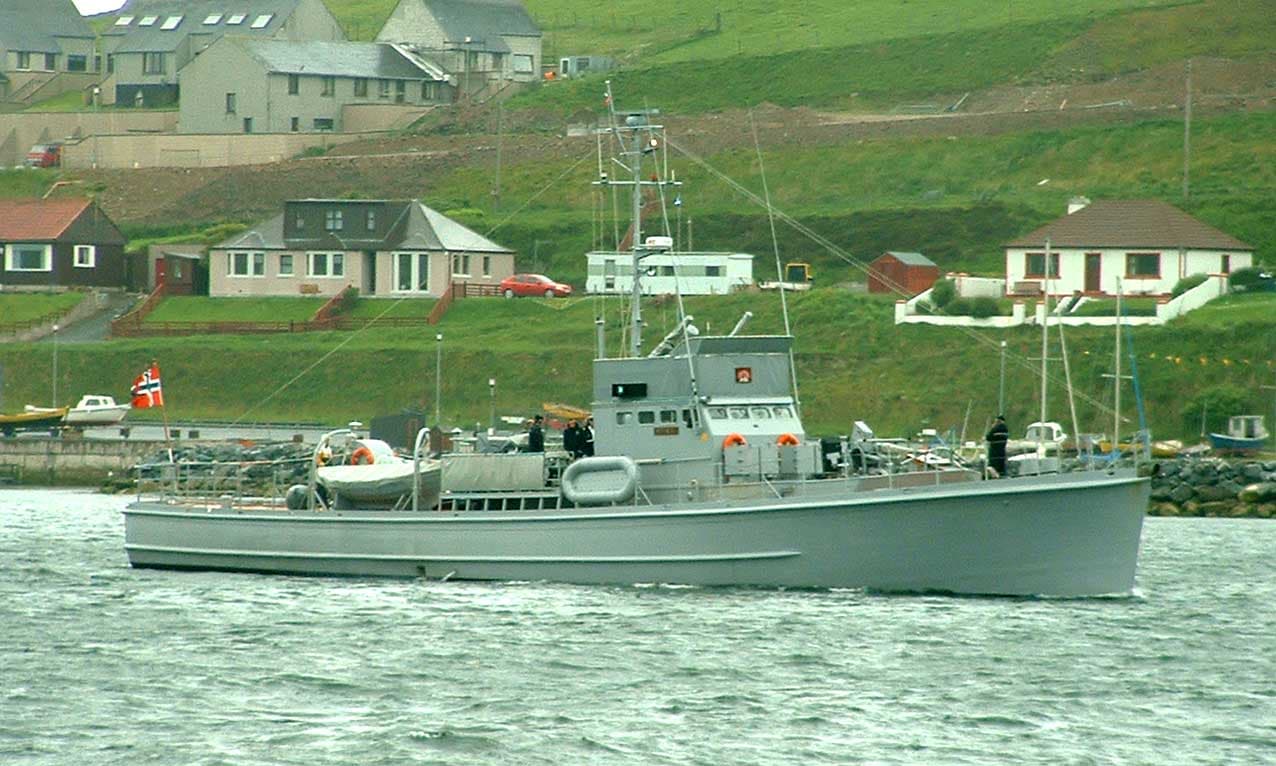
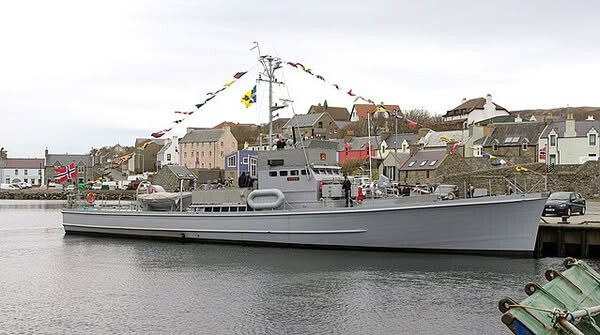
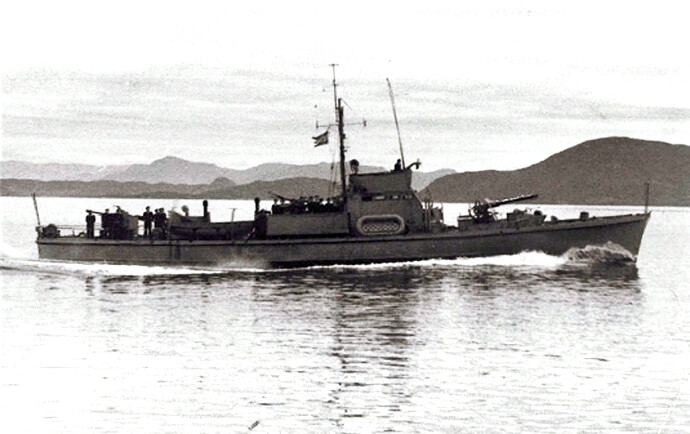
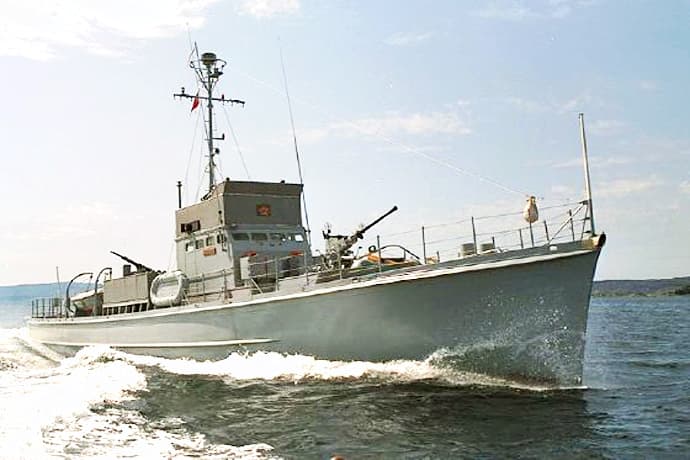
Formerly USN SC-718, is one of three submarine chasers that the Norwegian Navy received from the United States in 1943. A total of 878 such submarine chasers were built, and several allied countries used the boat type. In the Norwegian navy, they were used by the Shetland gang from the autumn of 1943. The captain of KNM “Hitra” was Ingvald Eidsheim. After the war, the KNM “Hitra” was put into service as a coast guard and coast guard until 1953 when she was laid up. In 1959 the ship was sold, but in 1981 was rediscovered half submerged in Sweden. A fundraiser to save her was started, and in 1983 the ship was raised and towed to Omas Båtbyggeri in Stord, Norway. On the day 42 years after the German capitulation in 1945 (8 May 1987), the newly restored ship was handed over to the Inspector General for the Navy.
A lot has been said about the Shetland Bus in conjunction with the “Liberation Convoy 2025”, but mostly about the earlier part of the war, when fishing boats were used. War Sailors (Feature film) - #11 by ombugge
From 1943 three US-built subchasers were used for the Shetland Bus operations, one of which has been restored and are now a museum ship:
27 trips in total. 22 trips as skipper. 16 trips as commander on KNM Hessa and 6 trips as skipper on a fishing boat and 5 trips on a boat as a private.
Olai Hillersøy (born March 3, 1915 in Bulandet, died March 14, 2006):
37 trips in total. 7 trips as a crew member 4 trips as a skipper on a fishing boats, 21 trips as a NK on Hessa and 5 trips as a Commander on Hessa.
Inge Trondsen born February 21, 1915
11 trips as Commander on KNM Hessa. Unfortunately, we do not have a picture of Inge Trondsen.
Source: Shetlands-Larsen’s post
There is a great museum in Lerwick with a substantial number of exhibits dedicated to the Shetland Bus, and another in Scalloway.
Last year we sailed from Denmark to Norway, and after a few weeks exploring the fjords from Stavangar to Bergen, we sailed across to the Shetlands and spent some time there.
That’s a hard piece of ocean, and the courage of the crews in those Hardanger and Møre Cutters, who did this passage mostly at night and in winter, is almost impossible to imagine. More than a dozen of the cutters were lost.
Here is the Wikipedia page (English version) about the most famouse and well known member of the Shetlandsgjengen (the Shetland Gang) Leif Andreas Larsen.
(Better known as "Shetlands-Larsen):
There is also a Facebook page bearing his name:
David Howarth, a British Naval Officer who were in the SOE and served as Second in Command at the Naval Base in Shetland were very much involved in the Shetland Bus operation.
He has written a book about it:
The Shetland Bus: A WWII Epic of Escape, Survival, and Adventure, or Across to Norway (1951)
For those interested in war histories and individual heroism, there is a book about Jan Baalsrud and his escape from Gestapo, helped by local people in Northern Norway.
Also available on Amazon:
PS> He arrived from Shetland on a fishing boat together with a group of Norwegian saboteurs and radio operators to establish a base in Toftefjord.in March 1943,
This was to keep track of activity at German bases in Northern Norway, being the biggest threat for the Murmansk Convoys.
They were betrayed by Nazi sympathizers and the the fishing boat was blown up. Only Jan Baalsrud survived . He found shelter at a local home initially but was later moved to a hiding place in the mountains, while the Gestapo was looking for him. Being visited regularly by local patriots, supplying what little food they had.
He suffered frostbites and eventually gangrene to his toes. He used a knife to cut off his toes to save his life.
He was eventually pulled on a sledge across the border to Sweden and eventually managed to return to the UK.
He died in 1988 (age 71) at his home in Kongsvinger and was burried in Munndalen, the site of his ordeal and survival during the war.
After a bit of research I found the history of the fishing vessel with Reg. No. SF-10-NV,
This MK Vikingen, built in Hardanger in 1915 and still in existence.
She has been restored at Hardanger Fartøyvernsenter:
I wonder what that felt like? To get the hot bulb engine going with the blow torch, throw off the lines, get out to sea, raise the sails. Not knowing whether the Germans will see you and blow you out of the water, or whether those vicious short steep North Sea seas will overwhelm you. The sea gets up and starts boarding you; the crew frantically pumps, the helmsman put her up into the wind, but the vessel founders. The cold, cold North Sea washes over you. The end.
We think of our own lives as being so precious and inviolable. These guys went out knowing – it could all be over in a blink. Somehow we are not worthy of their memory, it seems to me.
Norway didn’t do it on it’s own:
According to records from the Registrar General of Shipping and Seamen, approximately 144,000 merchant seamen were serving aboard British registered merchant ships at the onset of World War II. Throughout the conflict, the total number of men who sailed in the Merchant Navy rose to an estimated 185,000. However, the toll of war on these brave souls was heavy; 36,749 seamen were lost to enemy actions, 5,720 were captured as prisoners, and 4,707 sustained injuries, culminating in a minimum casualty figure of 47,176, representing a casualty rate of over 25 per cent. Former Registrar General of Shipping and Seaman, Mr Gabe Thomas, noted that “27 per cent of merchant seamen perished due to enemy actions.”