
Of interest to students of situational awareness, OODA loops, and such like:
Cheers,
Earl
Of interest to students of situational awareness, OODA loops, and such like:
Cheers,
Earl
Gary Klein - Sources of Power Plan on reading that.
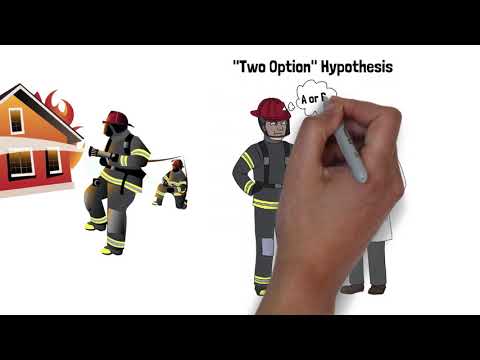
Recognition-primed decision (RPD)
RPD requires extensive experience (in order to correctly recognize the salient features of a problem and model solutions)
So far:
Gary Klein – Recognition-Primed Decision (RPD)
Hubert Dreyfus – System 0
J.J. Gibson - Accordance, Optical flow and motion parallax
Mica Endsley – Situational Awareness (SA) Model
Also:
Daniel Kahneman – System 1 / System 2
Michael Polanyi – Tacit Knowledge
A connection to Boyd, Marjorie Grene in the introduction to Michael Polanyi’s book Knowing and Being wrote: “All knowledge is orientation”. Boyd had a annotated copy of the edition with Grene’s introduction in his personal papers.
There’s an interview of Grene here: https://www.thebeliever.net/an-interview-with-marjore-grene/
BLVR: OK. I want to back out of this and move on. “All knowledge is orientation.” This is your slogan that I’ve seen written repeatedly. Could you elaborate on that?
MG: Well, that’s just what we’ve been talking about in Polanyi! In recent years, the last twenty-five or so, I’ve been very influenced by **J. J. Gibson’**s psychology of perception [in his Ecological Approach to Visual Perception, 1979] and the notion of affordance. That is, we’re always trying to locate ourselves in our environment. There’s information given us by the environment that we can pick up, so as to perceive what things afford us, what we can do with them. That’s not Polanyi, that’s Gibson. But I think that’s it, the same as “knowledge is orientation” and what Polanyi was after too.
Formula 1 drivers provide a valuable body of study material because they are so heavily instrumented, permitting the analysis of telemetry after the fact. If you look at classic overtakes at turns 1 or 2 immediately after the start you can see (and time) the kind of instinctual behavior described in these works.
Cheers,
Earl
Gibson might describe a gap in traffic that can be exploited an “affordance”.
: “The affordances of the environment are what it offers the animal, what it provides or furnishes, either for good or ill.”
A google search for both Klein and Gibson turned up this: Picture That! - Perspicacity
Lopes (1986) suggests that signal detection theory is a better model than classical logic or inference for most everyday decisions. Essentially, the action is prescribed by the signals - and the quality of choices often rests on whether the signals are picked-up or missed. This is also the basis for Gary Klein’s recognition primed decision making. E. Gibson’s (1969) work suggests that expertise in decision making depends on learning to attune to the signals that specify the affordances. Finally, the reason that hindsight is 20/20 is that the signals are generally quite obvious in retrospect.
I recently observed soldiers doing land navigation during a competitive training exercise. The teams that were most successful understood that navigation involved more than compass angles and distances. They used the terrain maps to identify key landmarks (e.g., distinctive topography such as ravines and roads) and then they let the landmarks direct them to the targets. Angles and distances are the primitives for geographers - but they are not the only primitives for finding your way in the world. The world is rich with information (e.g., landmarks) and smart people tune to this information to achieve skilled levels of performance.
Sounds exactly right.
Cheers,
Earl
Hey I’m the author of the original article that was shared. I actually really enjoy the forum format and so thought I would create an account to share a few points.
If you are interested in the connection between RPD and the OODA loop, I recommend an article by the CEO of ShadowBox, John Schmitt. John is a retired marine and wrote the tactical doctrine for the marines (MCDP1 Warfighting). He took over as CEO a year or two ago from Klein.
As for Klein and Dreyfus, their work does overlap quite a bit. They both agree that expertise is fundamentally about situational discrimination as opposed to deliberation between options. Because of this, the fundamental skills we teach are things like cue detection and sensemaking which we teach through scenarios (video or written). I think Klein does disagree with Drefus on a couple of things, but I cannot recall off the top of my head what those things might be.
Also note I said Sensemaking and not situational awareness. Klein disagrees with Endsley’s Situational Awareness model. I don’t know if he has written up his critiques anywhere, but check out his paper on Data-Frame Theory of Sensemaking or on Problem Detection which I think provide a better account. (If you can’t find the papers, let me know and I’ll share the PDFs)
I did take a look at Dreyfus’ System 0, which I hadn’t heard of before (neither had two of my colleagues). I couldn’t tell the difference between his description of System 0 and my understanding of System 1. Also, the description of System 1 that he uses (declarative knowledge) seems wrong to me. So my initial reaction is that he just misunderstands what System 1 is, but it’s also possible that I am the one who is confused. I’d like to hear what various Dual Process Theories scholars say about it before I give a strong opinion.
Personally, I don’t make too big a deal out of the two systems. The reality is that the brain is likely to be pattern matching (System 1) all the way down. The classic example of a System 2 process is a complicated math equation - but the way you solve such an equation is by breaking it down into a series of System 1 steps. So personally I’m more interested in how we give structure to pattern matching than I am interested in the correct way to distinguish between various cognitive systems.
And finally, a note on Gibson. Many in the NDM tradition are sympathetic to the ecological psych approach, but others are not. I would say the idea of affordances is widely accepted as a type of pattern that experts pick up on, but Gibson’s ideas around representation and direct perception are more controversial. I try to stay clear of the debate.
However, various people have built on Gibson’s approach in various ways that I do find appealing. For example, I’m sympathetic to a theory of the soliciting nature of affordances developed by Bruineberg and Rietveld. So I think there is value to Gibson even if I’m not entirely sure I understand him, let alone agree with him.
People use this information without conscious effort when they are in the environment that they are completely familiar with. From inshore commercial fisherman to forestry people they use the landmarks and terrain to navigate their way. I have just finished “The Seven Pillars of Wisdom” by T. E. Lawrence, better known as Lawrence of Arabia and how the desert tribes moved confidently across the desert.
I have never had the same feeling at sea but in a city in the Northern Hemisphere it takes me a couple of days to get orientated because the sun is South of me instead of North.
Had a similar reaction in the opposite direction when we visited New Zealand. The first night out the difference in the star fields was seriously unsettling. (The Southern Cross is beautiful, BTW)
Cheers,
Earl
Didn’t read it yet, a quick search didn’t turn up a easily accessible copy.
From what I did read reminded me of Andy Clark who I’m reading now. A google search did turn up this which had Klein, Karl Weick, Andy Clark and Edwin Hutchins who I’ve also come across.
Here is a link to Expertise out of Context. Gary’s paper on the Data-Frame Theory is chapter 6.
Thanks for sharing the LinkedIn article. It’s a fascinating combination of researchers they are covering.
Sensemaking is a general term that was coined by Weick, and he has inspired various others to propose their own theories (including Klein). However, Weick focused on organizational sensemaking, and some of the other theories also focus on that, which is less relevant to what I do, and so I am not as familiar. However, organizational sensemaking is going to be closely related to Hutchins work on Distributed Cognition and Clark’s work on Extended Cognition, and so may be worth looking into if you are interested in that side of things. (You may be familiar, but Hutchin’s work was principally with naval navigation. I’ve been meaning to read his book.)
What I like about Klein’s theory of sensemaking is its focus on expertise and that he recognizes the circularity inherent to the process. The data informs the frame, and the frame informs the data. I think this circularity is both problematic and essential for understanding expert performance. I think it can help explain why developing expertise is so hard. I am writing a short paper on this right now.
As for predictive processing, I am not totally convinced just yet. It is probably the best and most developed account we have. But it is sort of the String Theory of psychology. Lots of people believe it, it seems to fit and explain certain things, but it’s not clear how to prove or falsify it. But I am still interested and I’ll be reading that article you shared with interest. No one yet has done the work to square predictive processing with NDM and that is an area I have thought about building out despite my skepticism.
Thanks for the link to Data-Frame Theory of Sensemaking. I expected to get bogged down in jargon but found it very readable. Also reread your post linked in the OP, together a lot of good information.
I did read Hutchin’s Cognition in the Wild a while ago. His description and explanation of the Navy bridge team was useful but I didn’t understand much of the anthropology/sociology/cognitive theory stuff.
Off topic but another good one here: Benefitting from Identity Crisis - by Jared Peterson
Gary’s writing is very accessible. I highly recommend Sources of Power if for nothing else than the fact that it is full of super interesting stories and is very easy to read.
And glad you enjoyed my Little Letter Republic article. It is a little different than my other stuff. It is the only thing I have written where I winded up with less subscribers afterwards. ha
I hadn’t made the connection until just now but Sinovuyo Jack in the Linkin article mentions Karl Weick and identity as does Weick’s paper on the Mann Gulch Fire.
An interesting and somewhat related note:
Cheers,
Earl
Thank you. This is why AI is lacking at the moment and why great caution should be exercised if not regulated until there is more understanding.
Sources of Power by Klein is a very good book. There were a lot of stories about firefighters and others making decisions under time pressure etc. Also a chapter specifically about the value of stories.
Here’s the paper Conditions for Intuitive Expertise A Failure to Disagree by Klein and Kahneman (pdf)
Key concepts wrt intuition are skill and the validity of cues depending upon the environment (the cynefin model comes to mind).
NDM is Naturalistic Decision Making, HB is Heuristics and Biases.
The NDM and HB approaches share the assumption that intuitive judgments and preferences have the characteristics of System 1 activity: They are automatic, arise effortlessly, and often come to mind without immediate justification. However, the two approaches focus on different classes of intuition. Intuitive judgments that arise from experience and manifest skill are the province of NDM, which explores the cues that guided such judgments and the conditions for the acquisition of skill. In contrast, HB researchers have been mainly concerned with intuitive judgments that arise from simplifying heuristics, not from specific experience. These intuitive judgments are less likely to be accurate and are prone to systematic biases.
It’s my understanding that Dreyfus’ categorizes the two different classes of intuition, those that arise from experience and manifest skill as system 0 and those that arise from simplifying heuristics as system 1.