
“Dogs” hold something in place. For example on a door. The pawl is either up or down so they can be lifted, dropped etc.
Or an anchor or towing winch perhaps to keep it “In Place”? Your statement could very well apply to many things onboard.
Probably from the time they were called catheads.
Have heard Catheads term too. Meow
1 Like
Appropriate or not, I always liked the Norwegian term for this:
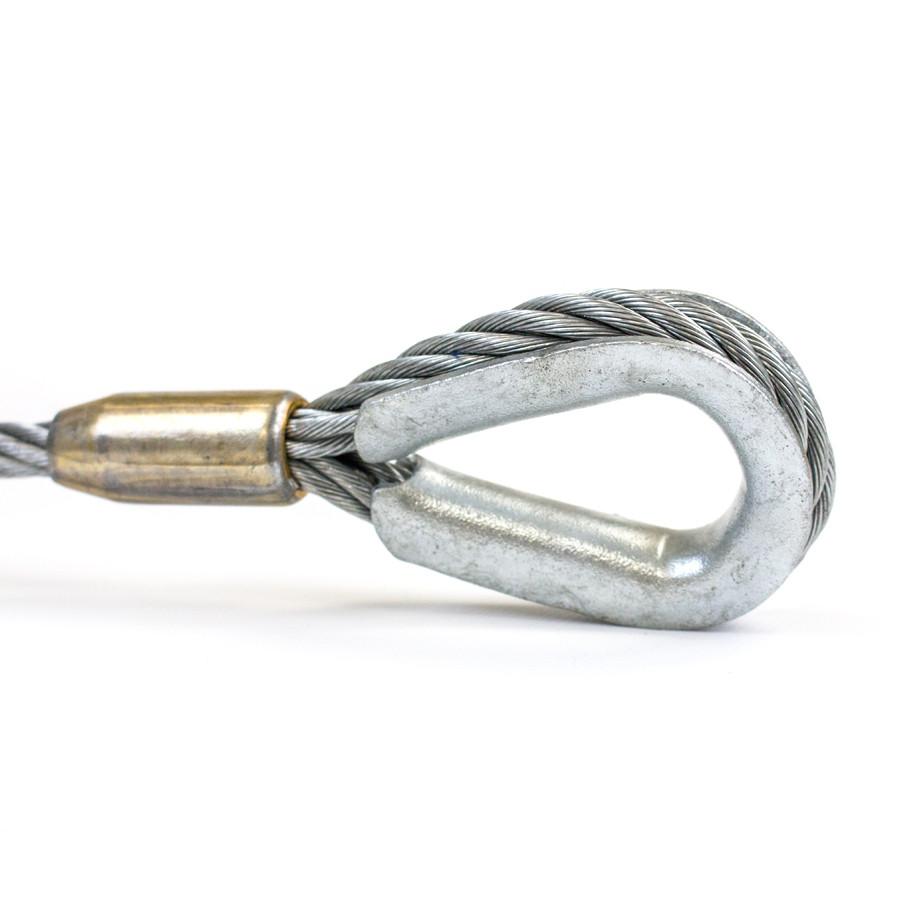
Where I’m from we call it a thimble, for some reason. Not nearly as descriptive.
Close’em and dog’em.
1 Like
Premade thimbles were always welcome.
Now I want to know what the Norwegian term was…
1 Like
During a certain class/lab at the scupper, the subject was learning to throw a spliced eye a distance to a bollard or piling to facilitate tying up. The instructor demonstrated the technique and then showed which side of the eye to hold while making the throw. He showed the bitter end side of the spliced eye and referred to it as “the cock” and the standing part as “the cunt”. He then said “which one would you like to grab? The cock or the cunt?”
The lesson stays with me to this day. Generational differences for sure.
2 Likes
Apparently the Norwegians and the Yankees DO have something in common!
1 Like
Likely. If they were painted pink they could have been called pecker heads
2 Likes
The term dick head being reserved for that guy from the office.
6 Likes
Depends on the context which term is best. For a shipyard period the term used in the ship’s drawing is going to be less ambiguous than whatever term the ship’s crew has been using.
For example on a PCC type vessel the watertight seal on the ships ramps are important. I never guessed that the term “knife edge” wouldn’t be immediately understood in a foreign shipyard. Turns out the ship’s drawings refers to it as a “compression bar”.
One of us in the discussion as to what a “knife edge” was ended up looking uninformed and it wasn’t the one with 40 years shipyard experience.
What is compression bar?
A steel bar fitted on hatch coaming upper plate against the seal, providing a weathertight joint.
1 Like
That would have been confusing for the electrician.
3 Likes
What color are the ones called gypsy heads?
Not olive.
Sure beat “Rolling an eye” in the wire in a hurry with cable clamps. Do what you gotta do.
Then there are single word terms that mean several things
“Cable” comes to mind. I was taught in school that a cable means three distinct things on a boat: a tenth of a nautical mile, a conduit for electrical energy, or a generic term for anchor chains.
Then I sailed and found out that “cable” means “whatever”. I’d like to say green sailors invariably call wire rope “cable”, which is true, but then old salts do also, depending on what kind of marine-trade they were brought up in, and trying to correct an old-salt into “proper” nomenclature is a losing battle.
When it comes to distances, American mariners, in my experience, prefer saying “tenth of a mile” rather than the more concise “cable”. But steaming through Canadian waters a mariner gets used to to the VTS calling out distances in cables, so many American watchstanders do also.
In my experience using “cable” to refer to the anchor chains also leaves the occasional mariner scratching their heads. Perhaps because there are boats that use “cable” (wire rope) for “anchor cables” rather than chain, and people get mixed up between the two.
Have read where certain distances and length in the long ago past were refered to as "Cables. In my short time in this world cable is wire. Distance while anchoring whether wire or chain were “Shots”.
1 Like
I heard cathead too. I think a cathead was shorter than a timberhead in my old school captain’s mind but after a few months I just threw a line at whatever looked like it might hold.
1 Like