
Sailing in following seas can be tricky business. You can more or less control the driving force produced by the sails by for instance reefing, but not the forces due to the shape of the hull. If the wave face is very steep ultimately a large fraction of the weight of the vessel can get converted into driving force. This force is considerable and often greater than that developed by the sails. If the boat does not accellerate readily the wave keeps catching up with the hull lifting the stern further while the driving component of the weight keeps increasing trying to accelerate the boat anyway.
This compromises course stability and is a key risk factor that can lead to a broach. Furthermore a yaw can be amplified by the instable balance of forces and if the rudder is unable to overcome the yaw moment, the boat will come beam-on to the wave crest and broach. Accidents in following seas happen very quickly and are often violent as boats tend to be thrown forward from the crests.
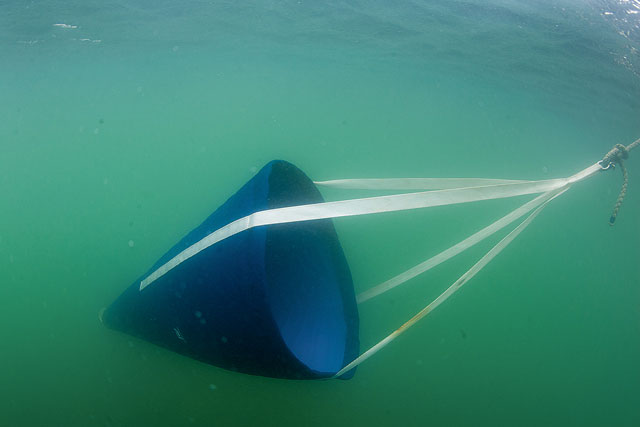
A drogue is an good way to slow down the ship in bad weather conditions to counteract the driving forces of both the sails and especially the ship’s weight. Towing a suitable drogue can provide considerable benefits for boats that lack the course stability required to run in following seas.
Another thing is that if the speed gets out of control the bow and part of the foredeck can dive into green water which could lead to a disastrous pitchpole.
With a friend of mine we sometime used to ride in the North Sea with a powerboat on a wave slope just behind the crest, riding piggyback you might say. That always was quite a special experience!
[FONT=Helvetica]
[/FONT]